
Automation that speeds up operations
What are the challenges in implementing AI and automation?
True challenges today are not just about the technology itself. They also include the overwhelming variety of available tools, the rapid pace of change, high IT costs, and the ongoing uncertainty about how well a given solution will actually work in your business.
These factors make it a fundamental challenge that many companies face today: the lack of adequate internal competencies.
Organizations simply do not have enough knowledge to navigate such a complicated environment independently and effectively. Therefore, it is important to leverage the experience of external specialists who can safely assist throughout the entire implementation process.
How to identify repetitive tasks?
A key step in automation is identifying processes that are repetitive and time-consuming (i.e., those that can be automated) and those that should not be automated.
How to model processes in a company?
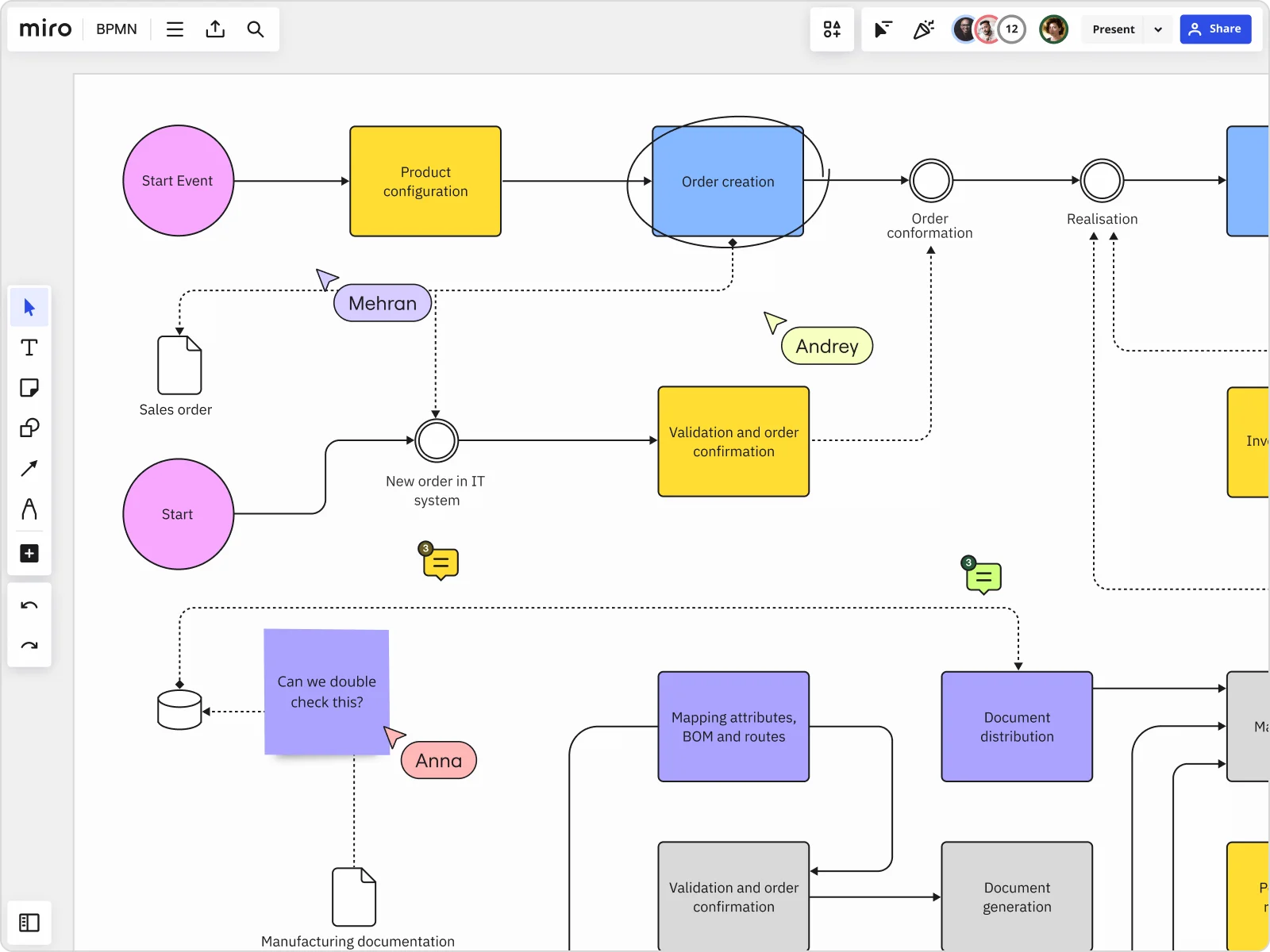
Implementing automation requires careful organizational architecture. It is crucial to create documentation of business processes that facilitates understanding of how different elements of the business interact with each other. A great tool for such efforts is to create a process map, for example, using the BPMN (Business Process Model and Notation) methodology. Well-identified processes are the foundation for effective automation, as they allow for determining what can actually be automated.


Why is long-term thinking in the context of AI in a company so important?
Implementing AI and automation technology should be seen as a strategic investment over the long term, rather than a one-time cost. Working on the development of these systems is just as important today as hiring and developing employees.
Contrary to appearances, this is an investment that proves to be cheaper in the long run. Wisely planned automation minimizes business risks, such as those associated with high employee turnover or human errors, ensuring the stability of processes.
That is why companies must design these systems flexibly, allowing for further evolution and the ability to adapt to dynamic market conditions and new business needs.
How to choose the right automation tool?
Choosing the right tools is crucial. They should be tailored to the specific processes of the business, but also take into account the capabilities and programs that the company already has in its resources. Improper selection of software can lead to inefficiency and frustration within the team. The most important step is to conduct a thorough analysis before making a decision to implement a specific solution.
How to effectively plan and monitor automations in the company?
Effective implementation of automation and AI requires careful planning and continuous monitoring of processes. Companies should establish clear objectives and performance indicators to assess the effectiveness of the deployed solutions. The project completion time varies and depends on their complexity and technical requirements, which is why it is important to be flexible and ready to adjust strategies as the project progresses.
Creating a Process Map: how to visually outline a given process from A to Z. Who does what? How long does it take? Where are the decision points? Where does the process most frequently get stuck?
Measuring the results: How to check if automation works? Metrics must be established before implementation. Only this way can real effects of the transformation be proven.